
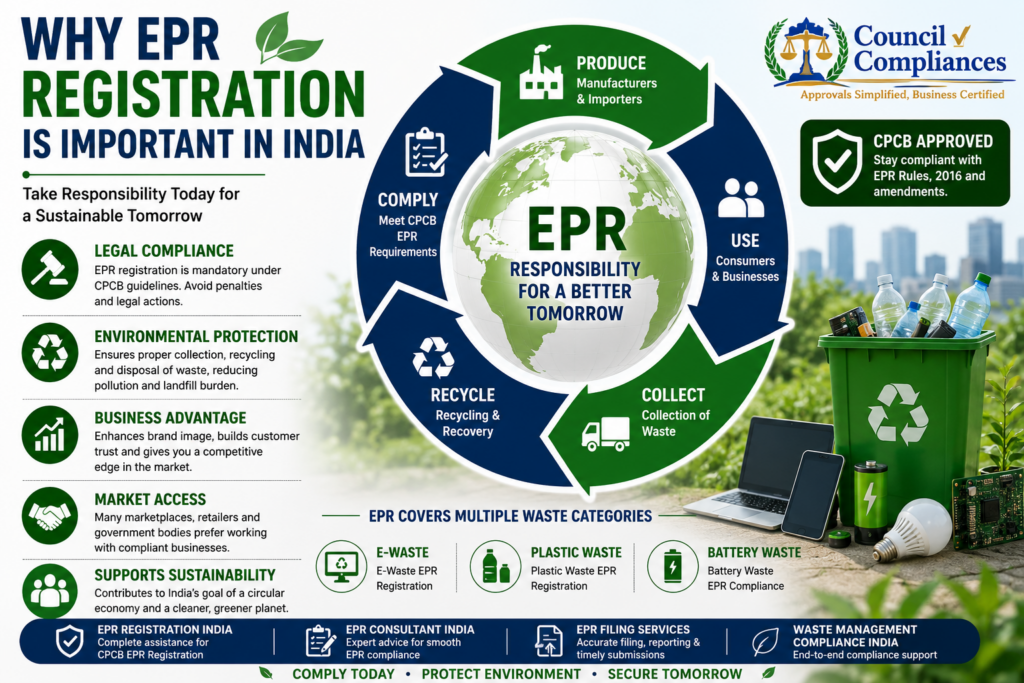
India is witnessing rapid industrial growth, increased consumer consumption, and a significant rise in waste generation. As a result, environmental regulations have become stricter to ensure businesses take responsibility for the waste generated by their products. This is one of the primary reasons why EPR Registration is Important in India for manufacturers, importers, producers, and brand owners.
Extended Producer Responsibility (EPR) is a government-mandated framework that requires businesses to collect, recycle, and dispose of post-consumer waste responsibly. The objective is to reduce environmental pollution and encourage sustainable waste management practices. Understanding Why EPR Registration is Important in India is essential for organizations aiming to comply with environmental regulations while maintaining a positive business reputation.
What is EPR Registration?
EPR Registration India is an authorization granted through the Central Pollution Control Board (CPCB) that enables businesses to fulfill their waste management responsibilities under applicable environmental laws.
The registration applies to organizations involved in manufacturing, importing, distributing, or selling products that generate electronic waste, plastic waste, or battery waste. Whether it involves E-Waste EPR Registration, Plastic Waste EPR Registration, or Battery Waste EPR Compliance, businesses must obtain the necessary approvals before operating in regulated sectors.
Through Extended Producer Responsibility Registration, companies commit to managing waste generated from their products throughout the product lifecycle.
Why EPR Registration is Important in India for Businesses
Several factors explain Why EPR Registration is Important in India for organizations across industries.
1. Legal Requirement Under Environmental Laws
One of the strongest reasons Why EPR Registration is Important in India is that it is mandatory for eligible businesses under waste management regulations issued by the Government of India.
2. Reduces Environmental Pollution
Proper implementation of EPR helps reduce landfill waste, promotes recycling, and minimizes the environmental impact of discarded products.
3. Supports Sustainable Business Practices
Businesses that obtain an EPR Certificate India demonstrate their commitment to environmental sustainability and corporate responsibility.
4. Enhances Brand Value
Consumers increasingly prefer organizations that prioritize environmental protection. Compliance improves brand image and customer trust.
5. Ensures Regulatory Compliance
Through EPR Compliance India, businesses can avoid penalties, legal actions, and operational disruptions.
These benefits clearly highlight Why EPR Registration is Important in India for long-term business success.
Who Needs EPR Registration?
The following entities typically require EPR Authorization India:
- Manufacturers of regulated products
- Importers of electronics, batteries, and packaging materials
- Producers and distributors
- Brand owners selling products under their labels
- Businesses dealing with plastic packaging
Organizations seeking EPR Registration for Manufacturers, EPR Registration for Importers, and EPR Registration for Brand Owners must comply with CPCB guidelines.
Key Benefits of EPR Registration
Compliance with CPCB Regulations
CPCB EPR Registration ensures businesses meet all regulatory obligations related to waste collection and recycling.
Improved Environmental Performance
Through Waste Management Compliance India, companies actively contribute to environmental conservation.
Better Market Acceptance
Many business partners and procurement agencies prefer working with compliant organizations.
Competitive Business Advantage
Understanding Why EPR Registration is Important in India helps businesses gain credibility in competitive markets.
Long-Term Sustainability
EPR promotes resource recovery and supports India’s circular economy initiatives.
Major Categories Covered Under EPR
E-Waste EPR Registration
Electronic product manufacturers and importers must establish systems for collecting and recycling electronic waste.
Plastic Waste EPR Registration
Plastic packaging producers are required to manage post-consumer plastic waste through authorized channels.
Battery Waste EPR Compliance
Battery manufacturers and importers must ensure environmentally sound collection and recycling of battery waste.
These categories further emphasize Why EPR Registration is Important in India for responsible waste management.
EPR Registration Process
The registration process generally involves:
- Online EPR Portal Registration
- Preparation of required documents
- Application submission to CPCB
- Technical review and verification
- Issuance of authorization
- Periodic compliance reporting
Professional EPR Filing Services can help businesses navigate the process efficiently and accurately.
How CouncilofCompliances Helps Businesses
CouncilofCompliances offers professional assistance for obtaining EPR Registration India and maintaining ongoing compliance. Their team supports manufacturers, importers, and brand owners with documentation, application filing, reporting obligations, and regulatory guidance.
With expertise in Environmental Compliance India, CouncilofCompliances helps businesses understand Why EPR Registration is Important in India and ensures compliance with the latest CPCB regulations.
Their comprehensive services simplify the registration process while helping organizations avoid delays and compliance challenges.
Future of EPR Compliance in India
As India strengthens its environmental policies, EPR regulations are expected to become even more comprehensive. Businesses that understand Why EPR Registration is Important in India today will be better prepared to adapt to future compliance requirements and sustainability expectations.
Companies that proactively implement Producer Responsibility Compliance can improve operational efficiency while contributing to national environmental goals.
Conclusion
The growing emphasis on environmental protection makes it clear why EPR Registration is Important in India for modern businesses. It ensures compliance with environmental laws, promotes responsible waste management, enhances brand reputation, and supports sustainable growth.
Whether your organization requires E-Waste EPR Registration, Plastic Waste EPR Registration, Battery Waste EPR Compliance, or CPCB EPR Registration, obtaining the appropriate authorization is essential. Understanding Why EPR Registration is Important in India enables businesses to remain compliant, competitive, and environmentally responsible in an evolving regulatory landscape.
FAQs
1. What is EPR Registration in India?
EPR Registration is a regulatory authorization requiring producers to manage and recycle waste generated by their products.
2. Why is EPR Registration Important in India?
It helps businesses comply with environmental laws, reduce pollution, and support sustainable waste management.
3. Who must obtain EPR Registration?
Manufacturers, importers, producers, and brand owners dealing with regulated products generally require EPR registration.
4. What is the role of CPCB in EPR compliance?
CPCB manages registration, monitoring, and enforcement of EPR regulations across India.
5. What types of waste are covered under EPR?
E-waste, plastic waste, battery waste, and other regulated waste categories are covered under EPR rules.
6. What is EPR Portal Registration?
It is the online process used to apply for EPR authorization and submit compliance reports.
7. Can EPR consultants help with registration?
Yes, experienced EPR consultants assist businesses with documentation, filing, approvals, and ongoing compliance management.