
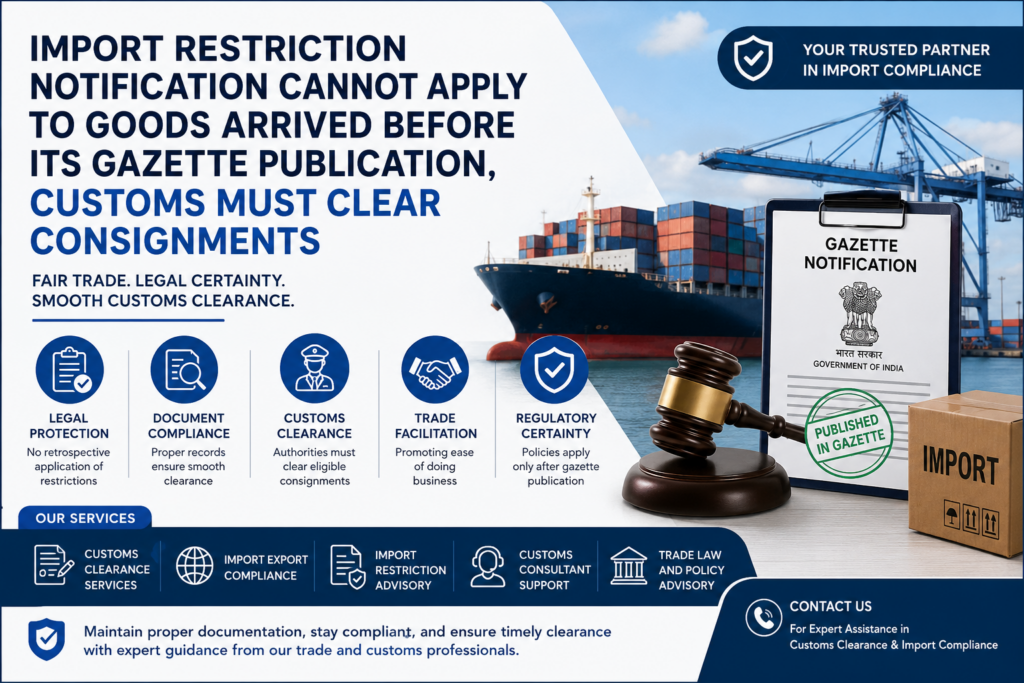
International trade relies on consistency, transparency, and fair enforcement of regulations. Importers make commercial decisions based on the rules in effect at the time of shipment. Therefore, when a new restriction is introduced after goods have already reached India, a critical legal principle comes into play Import Restriction Notification Cannot Apply to Goods Arrived Before Its Gazette Publication, Customs Must Clear Consignments. This principle helps protect legitimate trade activities from retrospective regulatory application.
At councilofcompliances, we provide professional support for importers facing regulatory challenges related to customs clearance, trade notifications, and import policy compliance. Our team assists businesses in proving that Import Restriction Notification Cannot Apply to Goods Arrived Before Its Gazette Publication, Customs Must Clear Consignments whenever shipments qualify under applicable laws and regulations.
Understanding India’s Import Regulatory Framework
India’s import environment is governed by multiple laws, policies, and notifications issued by government authorities. The framework includes:
- Import Policy India
- Foreign Trade Policy
- Indian Customs Act
- Customs Regulations India
- DGFT Notification requirements
- Foreign Trade Regulations
- International Trade Regulations
Changes to import conditions are typically announced through an Import Restriction Notification or another official Trade Policy Notification. However, legal enforceability generally begins only after official publication.
This is why Import Restriction Notification Cannot Apply to Goods Arrived Before Its Gazette Publication, Customs Must Clear Consignments remains an important compliance principle for importers.
Why Gazette Publication Matters
A Gazette Notification serves as the formal mechanism through which government decisions are communicated to the public. Under established Gazette Publication Rules, stakeholders must have official notice before regulatory requirements can be enforced.
Businesses often arrange procurement, manufacturing, logistics, and shipping weeks or months before products arrive in India. Applying new restrictions to already-arrived cargo would create uncertainty and disrupt commercial planning.
Consequently, where Import Restriction Notification Cannot Apply to Goods Arrived Before Its Gazette Publication, Customs Must Clear Consignments, importers may request clearance based on the regulations applicable at the time of shipment arrival.
Customs Clearance and Regulatory Compliance
The Customs Department India plays a vital role in facilitating lawful trade while ensuring regulatory compliance.
The Customs Clearance Process generally includes:
Document Verification
Authorities review import records and declarations.
Duty Assessment
Applicable Customs Duty Regulations are examined.
Compliance Review
Authorities verify adherence to import requirements.
Cargo Examination
Imported products may undergo inspection.
Final Clearance
Approved shipments receive release authorization.
Where Import Restriction Notification Cannot Apply to Goods Arrived Before Its Gazette Publication, Customs Must Clear Consignments, customs officers may consider shipment timelines and supporting evidence before making a final determination.
Essential Import Documentation
Proper documentation is one of the most important aspects of Import Compliance.
Required documents often include:
- Bill of Entry
- Bill of Lading
- Commercial Invoice
- Packing List
- Shipping Documents
- Insurance Records
- Import Shipment Documentation
- Product Certificates
Accurate documentation supports Import Consignment Clearance and demonstrates compliance with applicable trade regulations.
Challenges Faced by Importers
Importers frequently encounter difficulties such as:
- Delayed Import Shipment Clearance
- Confusion regarding Import Restriction Rules
- Cargo detention
- Licensing disputes
- Compliance verification issues
- Customs documentation errors
- Interpretation of DGFT Import Notification provisions
Professional advisory support helps organizations address these challenges effectively.
How councilofcompliances Supports Importers
At councilofcompliances, we offer end-to-end guidance for businesses involved in international trade.
Our services include:
- Customs Clearance Services
- Customs Compliance Services
- Import Restriction Advisory
- Import Export Consultant support
- Customs Clearance Consultant services
- Trade Facilitation India
- Import Export Compliance
- Business Import Compliance
- Customs Legal Compliance
- Logistics Compliance
- Cross Border Trade Compliance
- Import Goods Clearance assistance
Our experts evaluate shipment records and compliance documents to support cases where Import Restriction Notification Cannot Apply to Goods Arrived Before Its Gazette Publication, Customs Must Clear Consignments.
Advantages of Professional Compliance Services
Businesses that obtain expert support often benefit from:
- Reduced shipment delays
- Improved regulatory compliance
- Faster customs processing
- Better documentation management
- Enhanced legal preparedness
- Efficient communication with authorities
- Lower operational risks
Maintaining strong compliance systems also helps organizations adapt to evolving Customs Notification Updates and policy changes.
Building Long-Term Trade Compliance
In a constantly changing regulatory environment, companies must remain vigilant regarding:
- Trade Compliance India
- Import Policy Compliance
- Customs and Trade Regulations
- Import Regulatory Framework
- Trade Law India
- International Trade Compliance
By implementing effective compliance measures and maintaining accurate records, businesses can reduce risk and support uninterrupted import operations.
Conclusion
The principle that Import Restriction Notification Cannot Apply to Goods Arrived Before Its Gazette Publication, Customs Must Clear Consignments promotes fairness, transparency, and predictability in India’s trade ecosystem. Importers should maintain comprehensive documentation, monitor regulatory developments, and seek professional assistance whenever customs disputes arise.
With the support of councilofcompliances, businesses can confidently navigate import regulations, meet compliance obligations, and achieve smooth customs clearance for their consignments.
Frequently Asked Questions (FAQs)
1. What is an Import Restriction Notification?
An Import Restriction Notification is a government-issued notice that imposes restrictions or conditions on importing specific goods.
2. What is the significance of Gazette Publication?
Gazette Publication officially announces regulatory changes and generally determines when they become legally enforceable.
3. Can customs clear goods that arrived before a restriction was published?
In many cases, shipments that arrived before official publication may be eligible for clearance under previously applicable regulations.
4. What is Import Policy Compliance?
Import Policy Compliance means adhering to import regulations, licensing requirements, and customs laws.
5. Which documents are necessary for Import Consignment Clearance?
Bills of Entry, Bills of Lading, invoices, packing lists, shipping records, and supporting certificates are commonly required.
6. How does the Customs Department India regulate imports?
The department verifies compliance, assesses duties, reviews documentation, and facilitates lawful cargo clearance.
7. What are Customs Compliance Services?
These services help businesses comply with customs laws, prepare documentation, and manage regulatory requirements.
8. Why hire an Import Export Consultant?
An Import Export Consultant assists with compliance management, customs procedures, regulatory interpretation, and risk reduction.
9. How can businesses stay updated with Customs Notification Updates?
Businesses should regularly monitor official government notifications, DGFT announcements, and professional compliance advisories.
10. What is Cross Border Trade Compliance?
Cross Border Trade Compliance involves following international and domestic regulations governing import and export transactions.