
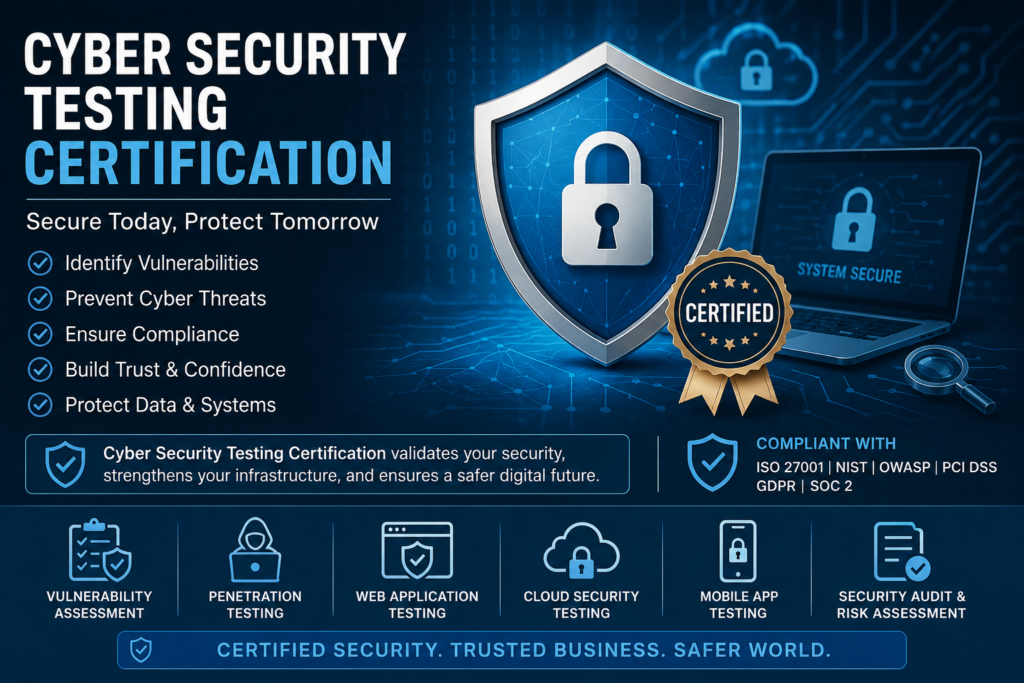
The modern business environment is highly dependent on digital technologies, cloud platforms, online transactions, and interconnected systems. While technology has improved efficiency and business growth, it has also increased the risk of cyber attacks. Organizations today face constant threats from hackers, malware, ransomware, phishing attacks, and data breaches. To protect critical systems and confidential information, businesses must adopt strong cyber security measures and obtain Cyber Security Testing Certification.
A comprehensive cyber security strategy helps organizations identify vulnerabilities, improve system protection, and comply with industry regulations. Through professional Cyber Security Testing, companies can secure their applications, networks, and cloud environments while minimizing operational risks.
Council of Compliances offers specialized cyber security services that help businesses strengthen digital security, meet compliance requirements, and achieve reliable certification standards.
What is Cyber Security Testing Certification?
Cyber Security Testing Certification is a structured evaluation process that assesses the security effectiveness of an organization’s IT infrastructure, applications, networks, and digital assets.
The purpose of the certification is to verify whether an organization follows recognized cyber security standards and best practices to prevent cyber threats and unauthorized access.
The certification process generally includes:
- Penetration Testing
- Vulnerability Assessment
- Network Security Testing
- Application Security Testing
- Cloud Security Testing
- Cyber Security Audit
By obtaining Cyber Security Testing Certification, businesses demonstrate their commitment to protecting customer data and maintaining secure operations.
Why Cyber Security Testing Matters
Cyber attacks are becoming more frequent and sophisticated. Even small businesses are now targeted because attackers often exploit weak security systems and outdated infrastructure.
Regular Cyber Security Testing helps organizations identify risks before they become serious security incidents.
Protection Against Cyber Threats
Security testing helps detect vulnerabilities that attackers may exploit.
Regulatory Compliance
Many industries require organizations to maintain strict Cyber Security Compliance standards.
Improved Customer Confidence
Customers trust businesses that actively protect sensitive information.
Reduced Financial Losses
Cyber attacks can lead to operational disruption, legal penalties, and financial damage.
Stronger Security Infrastructure
Testing improves the overall resilience of digital systems and networks.
These benefits make Cyber Security Testing Certification an essential investment for organizations operating in today’s digital landscape.
Types of Cyber Security Testing
Penetration Testing
Penetration Testing is one of the most effective methods used to identify exploitable vulnerabilities within systems and applications.
Security professionals simulate real-world cyber attacks to evaluate how effectively the organization can defend against intrusions.
Key advantages include:
- Identification of hidden security flaws
- Realistic attack simulations
- Better incident response planning
- Enhanced cyber defense mechanisms
Organizations performing regular Penetration Testing can significantly reduce the risk of successful cyber attacks.
Vulnerability Assessment
A Vulnerability Assessment is conducted to identify weaknesses in software, servers, operating systems, databases, and network devices.
This process helps organizations understand their risk exposure and prioritize security improvements.
The assessment identifies:
- Unpatched software
- Weak passwords
- Misconfigured systems
- Outdated applications
- Security loopholes
A proper Vulnerability Assessment helps businesses proactively strengthen their cyber security posture.
Network Security Testing
Network Security Testing evaluates the security of internal and external communication networks.
The testing process examines:
- Firewalls
- Switches
- Routers
- VPN configurations
- Wireless networks
The primary objective is to prevent unauthorized access and ensure secure network communication.
Strong Network Security Testing reduces the possibility of cyber intrusions and data theft.
Application Security Testing
Applications are often targeted by attackers seeking access to sensitive information. Application Security Testing identifies vulnerabilities in web applications, mobile applications, and APIs.
This testing includes:
- Authentication checks
- Authorization testing
- Session management review
- Input validation analysis
- Source code security review
Regular Application Security Testing helps organizations secure customer-facing applications and business software.
Cloud Security Testing
As cloud adoption continues to grow, organizations must secure their cloud infrastructure and storage systems.
Cloud Security Testing evaluates:
- Cloud configurations
- Access controls
- Data encryption
- Cloud applications
- Virtual machine security
This testing ensures that cloud-based systems remain protected against cyber threats and unauthorized access.
Importance of Cyber Security Audit
A Cyber Security Audit is a detailed examination of an organization’s security controls, policies, procedures, and compliance practices.
The audit process helps businesses:
- Evaluate existing security measures
- Identify policy gaps
- Improve risk management
- Ensure regulatory compliance
- Strengthen operational security
Regular Cyber Security Audit processes are essential for maintaining long-term security and compliance standards.
Cyber Security Compliance Standards
Many industries must comply with mandatory Cyber Security Compliance regulations to protect customer information and critical business operations.
Common compliance standards include:
- ISO 27001
- PCI DSS
- GDPR
- HIPAA
- SOC 2
Achieving Cyber Security Testing Certification helps organizations align with these compliance requirements and improve overall security management.
Information Security Certification Benefits
An Information Security Certification proves that an organization follows internationally accepted security practices and standards.
Benefits include:
- Enhanced brand reputation
- Increased customer trust
- Improved business opportunities
- Better compliance management
- Stronger cyber risk protection
Businesses with recognized certifications often gain a competitive advantage in the market.
Why Choose Council of Compliances?
Council of Compliances provides comprehensive cyber security services tailored to modern business needs.
Their services include:
- Advanced Penetration Testing
- Professional Vulnerability Assessment
- Comprehensive Network Security Testing
- Secure Application Security Testing
- Reliable Cloud Security Testing
- Detailed Cyber Security Audit
With experienced professionals and industry-focused solutions, Council of Compliances helps businesses achieve effective Cyber Security Testing Certification and long-term cyber resilience.
Future of Cyber Security Testing
The future of cyber security will continue evolving as businesses adopt artificial intelligence, IoT devices, remote work systems, and advanced cloud technologies.
Emerging cyber security trends include:
- AI-driven threat monitoring
- Zero trust security frameworks
- Automated compliance systems
- Advanced cloud security solutions
- Continuous vulnerability management
Organizations that prioritize Cyber Security Testing Certification today will be better prepared to handle future cyber threats and regulatory challenges.
FAQs
1. What is Cyber Security Testing Certification?
It is a certification process that evaluates the security strength of an organization’s digital systems and infrastructure.
2. Why is Cyber Security Testing important?
Cyber Security Testing helps organizations identify vulnerabilities and prevent cyber attacks.
3. What is Penetration Testing?
Penetration Testing simulates cyber attacks to detect exploitable security weaknesses.
4. What is included in Vulnerability Assessment?
A Vulnerability Assessment identifies security flaws, software vulnerabilities, and configuration issues.
5. Why is Network Security Testing necessary?
Network Security Testing protects communication systems and prevents unauthorized access to networks.
6. What does Application Security Testing involve?
Application Security Testing evaluates the security of web and mobile applications.
7. What is Cloud Security Testing?
Cloud Security Testing secures cloud-based infrastructure, storage systems, and applications.
8. Why is a Cyber Security Audit important?
A Cyber Security Audit helps organizations improve compliance, security controls, and risk management practices.