
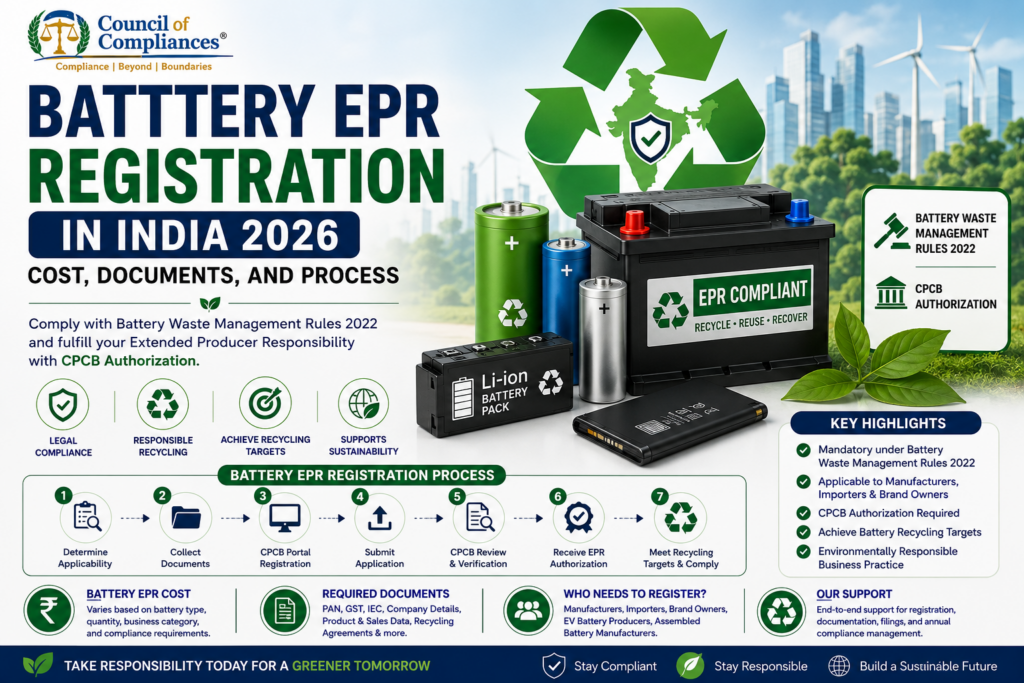
Environmental compliance has become a key responsibility for businesses involved in the battery sector. With stricter regulations and increasing focus on sustainability, Battery EPR Registration in India 2026: Cost, Documents, and Process is now one of the most important compliance requirements for manufacturers, importers, and brand owners. The Battery Waste Management Rules 2022 introduced a comprehensive framework that ensures responsible handling, collection, and recycling of waste batteries across the country.
The Central Pollution Control Board (CPCB) has implemented an online system through which businesses can obtain Battery EPR Authorization and fulfill their legal obligations. Compliance not only helps organizations avoid penalties but also contributes to environmental protection and resource recovery.
CouncilofCompliances assists businesses with end-to-end support for Battery EPR Compliance India, helping them navigate regulatory requirements efficiently.
Overview of Battery EPR Registration
Battery EPR Registration is a mandatory authorization issued by CPCB to entities that introduce batteries into the Indian market. Under Extended Producer Responsibility for Batteries, producers are responsible for managing the collection and recycling of waste batteries generated from their products.
The system aims to:
- Encourage responsible battery disposal
- Improve recycling rates
- Reduce environmental pollution
- Promote resource recovery
- Strengthen waste battery management practices
- Support sustainable development goals
Through proper compliance, organizations can contribute to a cleaner and more environmentally responsible ecosystem.
Applicability of Battery EPR Compliance
The regulations apply to various stakeholders involved in the battery supply chain, including:
Manufacturers
Companies producing batteries within India.
Importers
Businesses importing batteries or battery-containing products.
Brand Owners
Organizations marketing batteries under their own brand names.
EV Battery Producers
Companies involved in electric vehicle battery manufacturing and supply.
Battery Assemblers
Entities assembling battery packs and storage systems.
All these entities are required to complete CPCB Battery Registration and comply with prescribed recycling obligations.
Battery Categories Covered
The Battery Waste Management Rules 2022 cover multiple categories of batteries:
- Portable Batteries
- Industrial Batteries
- Automotive Batteries
- Electric Vehicle Batteries
- Lithium-Ion Batteries
- Lead Acid Batteries
Each category has specific compliance responsibilities related to collection, recycling, and reporting.
Documents Required for Registration
Before applying for Battery EPR Authorization, businesses should prepare the following Battery EPR Documents:
- PAN Card
- GST Registration Certificate
- Company Incorporation Documents
- IEC Certificate for Importers
- Authorized Signatory Details
- Product Information
- Battery Sales Data
- Quantity Declaration
- Address Proof
- Recycling Agreements
Accurate documentation plays an important role in ensuring successful application approval.
Battery EPR Registration in India 2026: Cost, Documents, and Process
The registration procedure involves a structured compliance pathway.
Registration Process
Compliance Assessment
Determine obligations based on business category and battery type.
Documentation Preparation
Compile and verify all required registration documents.
CPCB EPR Portal Registration
Create an account and submit company information through the online portal.
Application Filing
Upload supporting documents and battery-related data.
Regulatory Verification
CPCB reviews the application and may request additional information.
Approval and Authorization
After successful verification, Battery EPR Authorization is issued.
Ongoing Compliance
Registered entities must achieve Battery Recycling Targets India and submit required reports periodically.
Understanding Battery EPR Cost
The Battery EPR Cost varies depending on several operational factors:
- Type of batteries handled
- Annual sales quantity
- Compliance scope
- Recycling commitments
- Reporting obligations
- Consultancy and compliance support services
Because compliance requirements differ between businesses, costs are generally evaluated individually.
Benefits of Battery EPR Registration
Obtaining registration offers numerous advantages:
- Compliance with environmental regulations
- Improved brand credibility
- Reduced risk of penalties
- Enhanced sustainability performance
- Better waste battery management
- Increased stakeholder confidence
- Support for circular economy initiatives
Organizations involved in Lithium-Ion Battery EPR and Lead Acid Battery EPR can particularly benefit from improved recycling and resource recovery systems.
Why Choose CouncilofCompliances?
CouncilofCompliances provides comprehensive support for:
- Battery EPR Registration
- CPCB Battery Registration
- EPR Authorization for Batteries
- Documentation Assistance
- Portal Filing Services
- Compliance Monitoring
- Annual Return Filing
- Regulatory Advisory
Their expert team helps businesses streamline compliance and meet regulatory requirements effectively.
Conclusion
Battery EPR Registration in India 2026: Cost, Documents, and Process is essential for manufacturers, importers, and brand owners seeking compliance with the Battery Waste Management Rules 2022. By obtaining CPCB Battery Registration, achieving Battery Recycling Targets, and maintaining proper records, businesses can fulfill their legal responsibilities while contributing to environmental sustainability. Early compliance ensures smooth operations, reduced regulatory risks, and long-term business growth in India’s rapidly expanding battery industry.
FAQs
1. What is Battery EPR Registration?
Battery EPR Registration is a CPCB authorization required for producers, importers, and brand owners dealing with batteries.
2. Who must obtain Battery EPR Authorization?
Manufacturers, importers, brand owners, and battery assemblers are generally required to register.
3. What is the purpose of Battery Waste Management Rules 2022?
The rules ensure proper collection, recycling, and environmentally sound disposal of waste batteries.
4. Are EV batteries covered under EPR compliance?
Yes, EV Battery Compliance is mandatory under the current regulatory framework.
5. What is CPCB EPR Portal Registration?
It is the online registration process through which businesses apply for Battery EPR Authorization.
6. What are Battery Recycling Targets?
These are mandatory recycling obligations assigned to producers under EPR regulations.
7. Why is Battery EPR Compliance India important?
It ensures legal compliance, promotes environmental sustainability, and supports responsible battery waste management.