
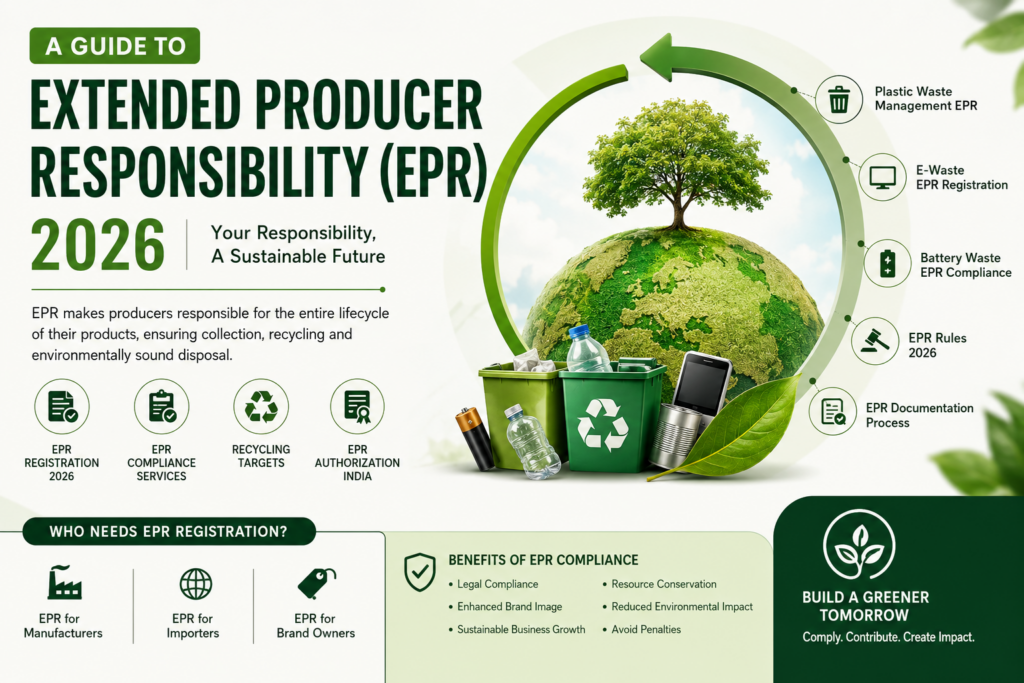
Environmental responsibility is becoming a critical aspect of business operations across India. Regulatory authorities have introduced stronger waste management requirements to ensure that manufacturers, importers, and brand owners actively participate in recycling and waste recovery initiatives. A guide to Extended Producer Responsibility (EPR) 2026 helps organizations understand the latest compliance requirements and establish effective systems for managing post-consumer waste.
As sustainability expectations continue to grow, businesses must comply with environmental regulations while maintaining operational efficiency. A guide to Extended Producer Responsibility (EPR) 2026 serves as an essential resource for companies seeking registration, authorization, and long-term compliance support.
Understanding Extended Producer Responsibility
Extended Producer Responsibility (EPR) is a regulatory framework that assigns responsibility for product waste management to producers. Instead of relying solely on municipal authorities, producers are required to organize collection, recycling, and environmentally sound disposal of products after use.
According to A guide to Extended Producer Responsibility (EPR) 2026, the primary objectives of EPR include:
- Reducing environmental pollution
- Encouraging recycling and resource recovery
- Promoting sustainable product design
- Strengthening waste management systems
- Supporting circular economy initiatives
Businesses that implement effective Extended Producer Responsibility Compliance strategies can improve both regulatory performance and corporate sustainability.
Who Must Comply with EPR Requirements?
Several categories of businesses are covered under EPR regulations, including:
EPR for Manufacturers
Manufacturers producing regulated products must fulfill collection and recycling obligations.
EPR for Importers
Importers bringing products into India are responsible for ensuring compliance with applicable EPR regulations.
EPR for Brand Owners
Brand owners marketing products under their own labels must meet prescribed waste management requirements.
These obligations are clearly explained in A guide to Extended Producer Responsibility (EPR) 2026, making it easier for organizations to identify their responsibilities.
EPR Registration 2026 Process
Obtaining EPR Registration 2026 is an important step for businesses operating in regulated sectors. The process generally involves:
Step 1: Compliance Assessment
Determine the applicable EPR category based on products and business activities.
Step 2: Document Preparation
Compile all documents required under the EPR Documentation Process.
Step 3: Application Submission
Submit the registration application through the official portal for CPCB EPR Registration.
Step 4: Regulatory Review
Authorities examine submitted information and supporting documents.
Step 5: Approval and Compliance Monitoring
After approval, organizations must continue meeting reporting and recycling obligations.
This process forms a central component of A guide to Extended Producer Responsibility (EPR) 2026.
Major Categories Under EPR Regulations
Plastic Waste Management EPR
Businesses involved in plastic packaging must comply with Plastic Waste Management EPR requirements. Producers are expected to recover and recycle a specified percentage of plastic waste generated from their products.
E-Waste EPR Registration
Manufacturers and importers of electronic equipment are required to obtain E-Waste EPR Registration and ensure environmentally responsible recycling of discarded electronics.
Battery Waste EPR Compliance
Organizations dealing with batteries must fulfill Battery Waste EPR Compliance obligations through authorized collection and recycling systems.
These categories are extensively covered in A guide to Extended Producer Responsibility (EPR) 2026 and remain a major focus of environmental regulations.
EPR Recycling Targets and Reporting
Achieving EPR Recycling Targets is one of the most important responsibilities for registered producers. Regulatory authorities establish annual recycling obligations that businesses must satisfy through approved recyclers.
Organizations should:
- Track waste collection activities
- Maintain recycling records
- Verify recycler certifications
- Submit compliance reports
- Monitor target achievement regularly
Failure to comply with EPR Rules 2026 may result in penalties and enforcement actions.
By following A guide to Extended Producer Responsibility (EPR) 2026, businesses can establish effective compliance systems that support both environmental and operational goals.
Benefits of EPR Compliance Services
Professional EPR Compliance Services can help organizations simplify complex regulatory requirements.
Benefits include:
- Faster registration approvals
- Improved compliance management
- Accurate documentation support
- Reduced risk of penalties
- Efficient reporting systems
- Expert regulatory guidance
Working with an experienced EPR Registration Consultant allows businesses to focus on growth while ensuring environmental compliance.
Why Choose councilofcompliances for EPR Support?
councilofcompliances provides comprehensive solutions for organizations seeking EPR registration and compliance assistance. Their team supports businesses with:
- EPR Registration 2026
- EPR Authorization India
- CPCB EPR Registration
- Compliance audits
- Documentation preparation
- Recycling target management
- Ongoing regulatory advisory services
As a reliable EPR Consultant India, councilofcompliances helps organizations navigate evolving environmental regulations with confidence.
By implementing the recommendations outlined in A guide to Extended Producer Responsibility (EPR) 2026, businesses can strengthen compliance performance while contributing to sustainable development.
Extended Producer Responsibility Guidelines India
The latest Extended Producer Responsibility Guidelines India emphasize transparency, accountability, and measurable environmental outcomes. Businesses are expected to establish efficient waste management systems and maintain accurate records of recycling activities.
Organizations that proactively align with A guide to Extended Producer Responsibility (EPR) 2026 can improve operational efficiency, strengthen stakeholder trust, and support India’s environmental sustainability goals.
As environmental regulations continue to evolve, EPR compliance will remain a critical requirement for responsible business growth and long-term success.
Frequently Asked Questions (FAQs)
1. What is Extended Producer Responsibility (EPR)?
EPR is a policy that requires producers to manage the collection, recycling, and disposal of post-consumer waste generated by their products.
2. Who needs EPR Registration 2026?
Manufacturers, importers, brand owners, electronics companies, battery producers, and packaging businesses may require EPR registration.
3. What is EPR Authorization India?
It is the approval process that allows businesses to operate in compliance with EPR regulations.
4. What is CPCB EPR Registration?
It is the registration process administered by the Central Pollution Control Board for regulated entities.
5. What are EPR Recycling Targets?
These are mandatory recycling and waste recovery obligations assigned to producers under EPR regulations.
6. What is the EPR Documentation Process?
It involves preparing and submitting company records, product details, compliance plans, and supporting documents.
7. Why is Plastic Waste Management EPR important?
It helps reduce plastic pollution and promotes responsible waste collection and recycling.
8. Can an EPR Registration Consultant assist with compliance?
Yes, consultants help businesses manage registration, documentation, reporting, and ongoing compliance requirements.