
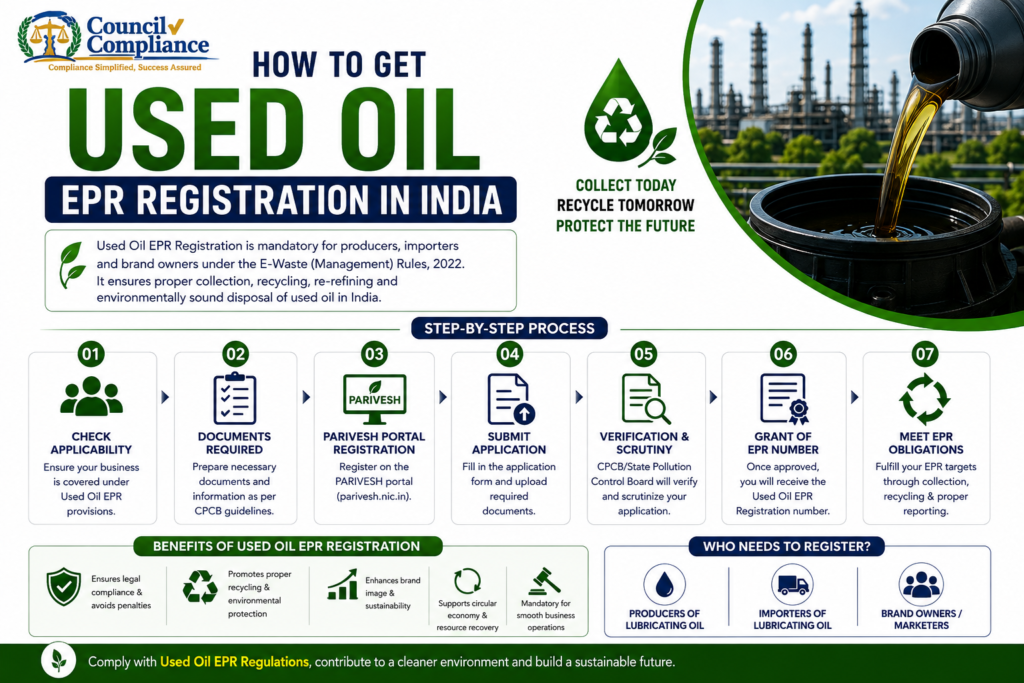
The proper management of used lubricating oil is an important part of India’s environmental protection framework. Improper disposal of used oil can contaminate soil and water and create serious ecological concerns. To promote responsible collection and recycling, the Extended Producer Responsibility framework places specific obligations on entities associated with lubricating oil. Therefore, understanding How to Get Used Oil EPR Registration in India is important for businesses that manufacture, import, sell, collect, or recycle used oil.
The EPR mechanism encourages producers and other obligated entities to take responsibility for the post-consumption management of used oil. Businesses looking for Used Oil EPR Registration India need to understand their category, documentation requirements, recycling obligations, and reporting responsibilities before submitting an application.
What is Used Oil EPR Registration?
Used Oil EPR Registration India is an environmental compliance mechanism through which eligible entities register with the relevant regulatory system and fulfill their responsibility for used oil management. The system promotes organized collection, recycling, record keeping, and environmentally sound waste handling.
Companies seeking How to Get Used Oil EPR Registration in India should first identify whether their business activities fall within the applicable EPR framework. Depending on their role, different obligations may apply to producers, importers, or recyclers.
Who Should Apply?
Businesses that may have obligations relating to EPR Registration for Used Oil include manufacturers and importers of lubricating oil and other covered entities involved in the used oil management chain.
Before applying for Used Oil EPR Authorization, businesses should review their products, operations, quantities, and regulatory responsibilities. Correct classification at the beginning can help prevent inconsistencies during registration.
Documents Generally Required
Applicants preparing for CPCB Used Oil EPR Registration should organize relevant business and compliance documents. Depending on the applicant category, these may include:
- Certificate of incorporation or business registration
- PAN and GST documents
- Authorized signatory information
- Registered office details
- Product and quantity information
- Manufacturing or import-related details
- Applicable pollution control approvals
- Agreements or arrangements with authorized recyclers
- Previous compliance records, where applicable
Keeping information consistent across documents and the application is an important part of How to Get Used Oil EPR Registration in India.
Registration Process
The registration procedure can generally be approached through the following stages.
1. Determine EPR Applicability
Review your business activities and determine whether you have obligations under the used oil EPR framework.
2. Prepare Business Information
Compile organizational, product, operational, and environmental compliance information.
3. Complete Portal Registration
Create an account and complete the relevant Used Oil EPR Portal Registration requirements.
4. Submit the Application
Enter accurate information and upload the required supporting documents.
5. Regulatory Verification
The submitted information may be examined by the concerned authority. Applicants should respond promptly if clarification or additional information is requested.
6. Obtain Registration
Once the application is accepted, the applicant can receive the applicable Used Oil EPR Certificate India or registration approval.
7. Maintain Continuing Compliance
After registration, businesses must continue fulfilling their EPR responsibilities rather than treating registration as a one-time activity.
Following each stage carefully makes How to Get Used Oil EPR Registration in India easier to manage and reduces the possibility of documentation-related delays.
Used Oil EPR Compliance After Registration
Registration must be supported by continuing Used Oil EPR Compliance. Businesses should maintain accurate records of their obligations, quantities, collection activities, recycling transactions, and supporting documentation.
Effective Used Oil Collection and Recycling is central to the EPR system. Organizations should work with appropriate authorized recyclers and retain records demonstrating that used oil has been managed through compliant channels.
A valid Used Oil Recycling Certificate or other applicable recycling documentation can help establish evidence of recycling activities, subject to the prevailing regulatory requirements.
Importance of Waste Oil Management
The Waste Oil Management Rules India framework aims to promote safe and environmentally responsible management of waste oil. Used oil should not be discarded through unauthorized methods because contamination can cause long-term environmental damage.
Implementing EPR for Waste Lubricating Oil helps businesses move toward resource recovery and a circular economy. Proper recycling can allow valuable components to be recovered and reduce dependence on virgin resources.
Businesses must also pay attention to Hazardous Waste Oil Compliance, particularly where their activities involve storage, handling, transportation, or processing of materials covered by hazardous waste requirements.
Why Professional Assistance Can Help
EPR requirements can involve technical documentation, portal procedures, recycling records, and continuing reporting responsibilities. A professional Used Oil EPR Consultant India can help businesses organize these requirements and reduce administrative difficulties.
For businesses seeking How to Get Used Oil EPR Registration in India, compliance support may include application preparation, document verification, portal assistance, recycler coordination, and post-registration compliance management.
CouncilofCompliances can be referred to for additional compliance-oriented guidance when businesses are evaluating their environmental registration and documentation requirements.
Benefits of Proper EPR Compliance
Successful Used Oil Recycling Compliance India can provide several advantages, including:
- Better environmental risk management
- Organized waste handling
- Improved regulatory preparedness
- Transparent recycling records
- Support for sustainability initiatives
- Greater confidence among business stakeholders
It also strengthens the implementation of Used Oil Producer Responsibility by ensuring that waste management remains connected to the businesses responsible for covered products.
Conclusion
Knowing How to Get Used Oil EPR Registration in India is essential for businesses seeking to manage their environmental responsibilities effectively. From determining applicability and preparing documents to completing portal registration and maintaining recycling records, every stage requires accuracy and regulatory awareness.
Businesses should maintain proper Used Oil EPR Compliance, work with authorized recycling channels, and preserve relevant documentation. With the right compliance strategy and professional guidance, organizations can meet their obligations while contributing to India’s broader goals of sustainable waste management and resource recovery.
FAQs
1. What does Used Oil EPR Registration India mean?
It is a regulatory registration mechanism designed to ensure responsible management, collection, and recycling of used oil by obligated entities.
2. What is required before applying for registration?
Applicants should generally prepare business registration details, PAN, GST information, authorized signatory details, product information, and applicable environmental documents.
3. What is Used Oil EPR Authorization?
It is the applicable regulatory authorization or registration that enables an obligated entity to fulfill its responsibilities under the used oil EPR framework.
4. Why is the Used Oil EPR Portal Registration important?
It provides the online mechanism for submitting relevant business information and completing the applicable registration process.
5. What is a Used Oil Recycling Certificate?
It is supporting evidence associated with recycling activities carried out through an appropriate recycling channel, subject to applicable regulatory requirements.
6. Is a consultant necessary for Used Oil EPR Registration?
A consultant may not be mandatory in every case, but professional assistance can help businesses with documentation, application filing, and continuing compliance.
7. What happens after obtaining Used Oil EPR Registration?
Businesses must continue meeting their applicable EPR obligations, maintain relevant records, use appropriate recycling channels, and fulfill reporting or documentation requirements.