
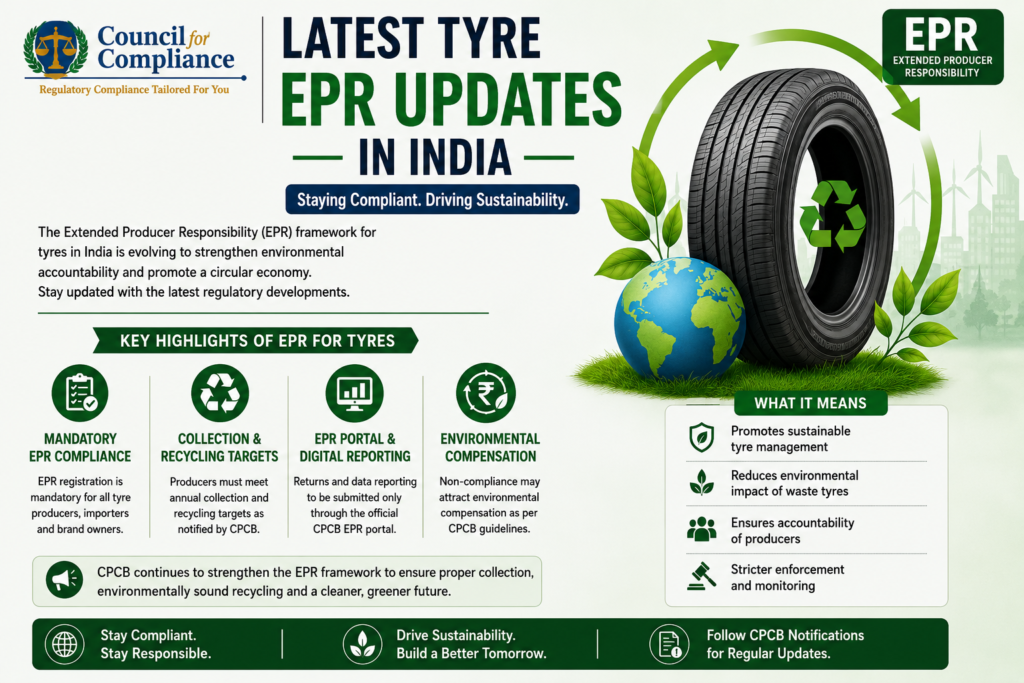
The Latest Tyre EPR Updates in India have made environmental compliance an important responsibility for tyre manufacturers, importers, and other entities covered under the country’s waste management framework. The Extended Producer Responsibility system is designed to ensure that waste tyres are collected, processed, and recycled through environmentally responsible methods.
For businesses operating in this sector, keeping track of the Latest Tyre EPR Updates in India is important for avoiding compliance gaps and maintaining proper records. The framework also supports India’s transition toward a circular economy by encouraging recovery of useful materials from discarded tyres.
What Does Tyre EPR Mean?
Extended Producer Responsibility for Tyres requires producers and importers to take responsibility for the environmental impact associated with tyres placed in the Indian market. Instead of leaving end-of-life tyre management entirely to local waste systems, the EPR framework places defined responsibilities on businesses.
The Latest Tyre EPR Updates in India focus on improving accountability, traceability, recycling performance, and digital monitoring of tyre waste.
Important Tyre EPR Updates India
The current Tyre EPR Updates India framework requires covered businesses to pay close attention to registration, recycling obligations, EPR certificates, and reporting requirements.
Important compliance areas include:
- Registration with the applicable CPCB online system.
- Accurate reporting of tyres introduced into the market.
- Meeting prescribed recycling obligations.
- Procuring eligible EPR certificates.
- Maintaining records of compliance activities.
- Working with authorized waste tyre recyclers.
- Completing applicable returns and reporting within prescribed requirements.
These measures strengthen the implementation of Tyre Waste Recycling Rules and help regulators monitor the movement and processing of waste tyres.
CPCB Tyre EPR Registration for Businesses
CPCB Tyre EPR Registration is a fundamental compliance requirement for eligible producers and importers. Businesses should provide accurate organizational, product, and operational information during registration.
Depending on the entity and applicable requirements, documentation may include business registration records, PAN, GST information, authorized signatory details, product information, and relevant production or import data.
The Latest Tyre EPR Updates in India make it increasingly important for businesses to keep their registration information accurate and updated.
Meeting Tyre EPR Targets India
The EPR system establishes recycling responsibilities for regulated entities. Tyre EPR Targets India require businesses to monitor the quantity of tyres introduced into the market and determine their applicable recycling obligations.
Companies should maintain systematic records of sales, imports, recycling certificates, and other relevant information. Regular internal reviews can help identify potential shortfalls before reporting deadlines.
The Latest Tyre EPR Updates in India therefore require businesses to treat EPR compliance as an ongoing process rather than a one-time registration activity.
Role of Authorized Tyre Recyclers
Authorized recyclers are an essential part of the EPR ecosystem. A recycler processes waste tyres and, where applicable, generates certificates that can be used by eligible producers or importers toward their EPR obligations.
Businesses should verify the authorization and legitimacy of recycling partners before entering into compliance arrangements. Proper verification supports Tyre Recycling Compliance India and reduces the risk of relying on invalid documentation.
Tyre EPR Certificate and Documentation
A Tyre EPR Certificate provides evidence associated with the recycling of waste tyres. Producers and importers should maintain proper documentation relating to certificates, transactions, recycling quantities, and regulatory submissions.
Under the Latest Tyre EPR Updates in India, accurate documentation can help businesses demonstrate compliance during regulatory review or verification.
Waste Tyre Recycling Authorization
Entities involved in recycling waste tyres must follow applicable regulatory requirements and obtain the necessary Waste Tyre Recycling Authorization. Authorized facilities play a key role in converting discarded tyres into useful recovered materials and products.
Properly managed recycling helps reduce uncontrolled disposal, supports resource recovery, and strengthens India’s waste management infrastructure.
Why Professional Compliance Assistance Matters
Tyre EPR requirements can involve registration, target calculations, certificate management, documentation, and periodic reporting. Businesses unfamiliar with the regulatory framework may find these processes difficult to manage independently.
councilofcompliances can support organizations seeking structured assistance with EPR compliance activities. A professional Tyre EPR Compliance Consultant can help businesses understand their obligations, organize documentation, monitor targets, and address compliance-related requirements.
Benefits of Following Tyre EPR Guidelines 2026
Businesses that proactively follow the Tyre EPR Guidelines 2026 can benefit from:
- Better regulatory preparedness.
- Reduced compliance risks.
- Improved waste management practices.
- Stronger environmental credentials.
- More organized documentation.
- Better coordination with authorized recyclers.
- Support for circular economy objectives.
The Latest Tyre EPR Updates in India encourage businesses to integrate environmental responsibility into their regular operations.
Conclusion
The Latest Tyre EPR Updates in India demonstrate the growing importance of responsible tyre waste management. Manufacturers and importers should understand their EPR responsibilities, complete applicable registration requirements, monitor recycling targets, maintain accurate records, and work with authorized recyclers.
Following Tyre Recycling Obligations India and the applicable EPR Registration for Tyre Manufacturers India requirements can help businesses remain prepared for regulatory scrutiny while contributing to sustainable tyre waste management.
Frequently Asked Questions (FAQs)
1. What are the Latest Tyre EPR Updates in India?
They focus on stronger registration, recycling, certificate management, reporting, and monitoring requirements for covered tyre businesses.
2. What is Extended Producer Responsibility for Tyres?
It is a framework that places responsibility on eligible producers and importers for managing the end-of-life recycling of tyres.
3. Is CPCB Tyre EPR Registration mandatory?
Eligible producers and importers covered by the applicable regulations are required to complete the prescribed CPCB registration process.
4. What is a Tyre EPR Certificate?
It is documentation associated with the recycling of waste tyres by eligible or authorized recycling facilities.
5. What are Tyre EPR Targets India?
They are prescribed recycling obligations that covered businesses must fulfill according to applicable regulatory requirements.
6. What is Waste Tyre Recycling Authorization?
It refers to the applicable authorization or regulatory approval required for entities undertaking waste tyre recycling activities.
7. Why hire a Tyre EPR Compliance Consultant?
A consultant can assist with registration, documentation, recycling target management, certificate-related processes, and ongoing compliance.