
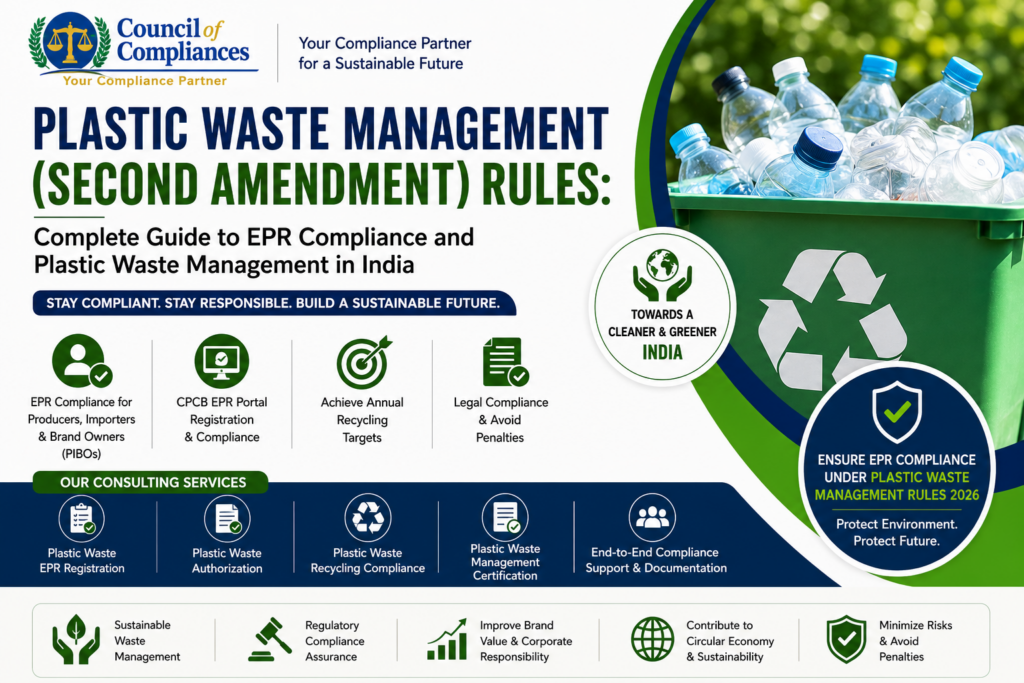
The increasing environmental concerns associated with plastic pollution have led India to strengthen its waste management regulations through the PLASTIC WASTE MANAGEMENT (SECOND AMENDMENT) RULES: Complete Guide to EPR Compliance and Plastic Waste Management in India. These regulations are intended to ensure that businesses take responsibility for the plastic waste generated through their products and packaging materials.
The PLASTIC WASTE MANAGEMENT (SECOND AMENDMENT) RULES: Complete Guide to EPR Compliance and Plastic Waste Management in India establish a robust framework for collection, recycling, reuse, and environmentally sound disposal of plastic waste. The regulations primarily focus on implementing Extended Producer Responsibility (EPR) and increasing accountability among Producers, Importers, and Brand Owners (PIBOs).
For businesses operating in India, understanding and complying with the PLASTIC WASTE MANAGEMENT (SECOND AMENDMENT) RULES: Complete Guide to EPR Compliance and Plastic Waste Management in India has become essential for maintaining regulatory compliance and supporting sustainable business practices.
Understanding Plastic Waste Management Amendment Rules India
The Plastic Waste Management Amendment Rules India are designed to reduce plastic pollution and improve waste management efficiency across the country. These rules place significant responsibility on businesses that introduce plastic packaging into the market.
The objective of the PLASTIC WASTE MANAGEMENT (SECOND AMENDMENT) RULES: Complete Guide to EPR Compliance and Plastic Waste Management in India is to ensure that plastic packaging waste is properly collected, recycled, and processed through authorized channels.
The regulations encourage organizations to adopt environmentally responsible practices while contributing to the development of a circular economy.
Key Highlights of Plastic Waste Management Rules 2026
The Plastic Waste Management Rules 2026 include several important compliance requirements:
- Mandatory Plastic Waste EPR Registration
- Annual plastic waste recycling obligations
- Online compliance tracking through CPCB
- Registration of plastic waste processors
- Enhanced reporting and documentation requirements
- Environmentally sound waste disposal mechanisms
These provisions make the PLASTIC WASTE MANAGEMENT (SECOND AMENDMENT) RULES: Complete Guide to EPR Compliance and Plastic Waste Management in India one of the most important environmental compliance frameworks for businesses operating in India.
EPR Compliance for Producers Importers and Brand Owners (PIBOs)
A major component of the regulations is EPR Compliance for Producers Importers and Brand Owners (PIBOs).
Under Extended Producer Responsibility (EPR), businesses are responsible for managing the lifecycle of plastic packaging introduced into the market. This includes:
- Collection of plastic waste
- Recycling and recovery
- End-of-life disposal
- Compliance reporting
- Fulfillment of annual recycling targets
The PLASTIC WASTE MANAGEMENT (SECOND AMENDMENT) RULES: Complete Guide to EPR Compliance and Plastic Waste Management in India require organizations to demonstrate compliance through documentation and annual reporting.
CPCB EPR Portal Registration Process
The CPCB EPR Portal Registration process enables businesses to obtain approval for plastic waste compliance activities.
The registration procedure generally includes:
- Creation of an online account.
- Submission of company information.
- Declaration of plastic packaging data.
- Uploading compliance documents.
- Verification and approval by CPCB.
Successful registration is a key requirement under the PLASTIC WASTE MANAGEMENT (SECOND AMENDMENT) RULES: Complete Guide to EPR Compliance and Plastic Waste Management in India.
Plastic Packaging EPR Obligations and Recycling Targets
Businesses must fulfill various Plastic Packaging EPR Obligations, including:
- Waste collection and channelization
- Recycling through authorized recyclers
- Maintaining compliance records
- Achieving annual recycling targets
- Filing periodic reports
The prescribed Plastic Waste Recycling Targets are designed to improve recycling rates and reduce environmental impact.
Compliance with these obligations helps businesses maintain strong Plastic Waste Regulatory Compliance India standards while contributing to environmental sustainability.
Plastic Waste Authorization and Certification
Organizations involved in plastic waste management activities may require Plastic Waste Authorization from the relevant authorities.
Many businesses also seek Plastic Waste Management Certification to strengthen their sustainability initiatives and demonstrate commitment to environmental compliance.
Certification can improve stakeholder confidence, support ESG goals, and enhance corporate reputation.
Why Choose CouncilofCompliances for Plastic Waste Management Compliance?
CouncilofCompliances offers specialized consultancy services for businesses seeking assistance with plastic waste regulations and EPR obligations.
Services include:
- Plastic Waste EPR Registration
- CPCB EPR Portal Registration
- Plastic Waste Authorization
- Plastic Waste Management Compliance
- Plastic Waste Recycling Compliance
- EPR Compliance for Producers Importers and Brand Owners (PIBOs)
- Compliance reporting and documentation support
With professional guidance from CouncilofCompliances, organizations can efficiently comply with the PLASTIC WASTE MANAGEMENT (SECOND AMENDMENT) RULES: Complete Guide to EPR Compliance and Plastic Waste Management in India while minimizing compliance risks.
Benefits of Sustainable Plastic Waste Management
Implementing Sustainable Plastic Waste Management practices provides numerous benefits:
- Reduced environmental impact
- Enhanced regulatory compliance
- Improved corporate image
- Better waste traceability
- Increased recycling efficiency
- Support for circular economy initiatives
The PLASTIC WASTE MANAGEMENT (SECOND AMENDMENT) RULES: Complete Guide to EPR Compliance and Plastic Waste Management in India encourage businesses to adopt responsible waste management practices that create long-term environmental and economic value.
FAQs
1. What are the Plastic Waste Management (Second Amendment) Rules?
These are updated regulations that strengthen plastic waste management and EPR compliance requirements in India.
2. Who needs Plastic Waste EPR Registration?
Producers, Importers, Brand Owners (PIBOs), and Plastic Waste Processors.
3. What is Extended Producer Responsibility (EPR)?
EPR requires businesses to collect, recycle, and manage plastic waste generated by their products and packaging.
4. What is CPCB EPR Portal Registration?
It is the official registration system for entities covered under plastic waste EPR regulations.
5. Are Plastic Waste Recycling Targets mandatory?
Yes, regulated entities must meet prescribed recycling obligations under the EPR framework.
6. What is Plastic Waste Authorization?
It is regulatory approval required for certain plastic waste handling and management activities.
7. How can CouncilofCompliances help with compliance?
CouncilofCompliances assists with registration, documentation, reporting, certification, and complete EPR compliance management.