
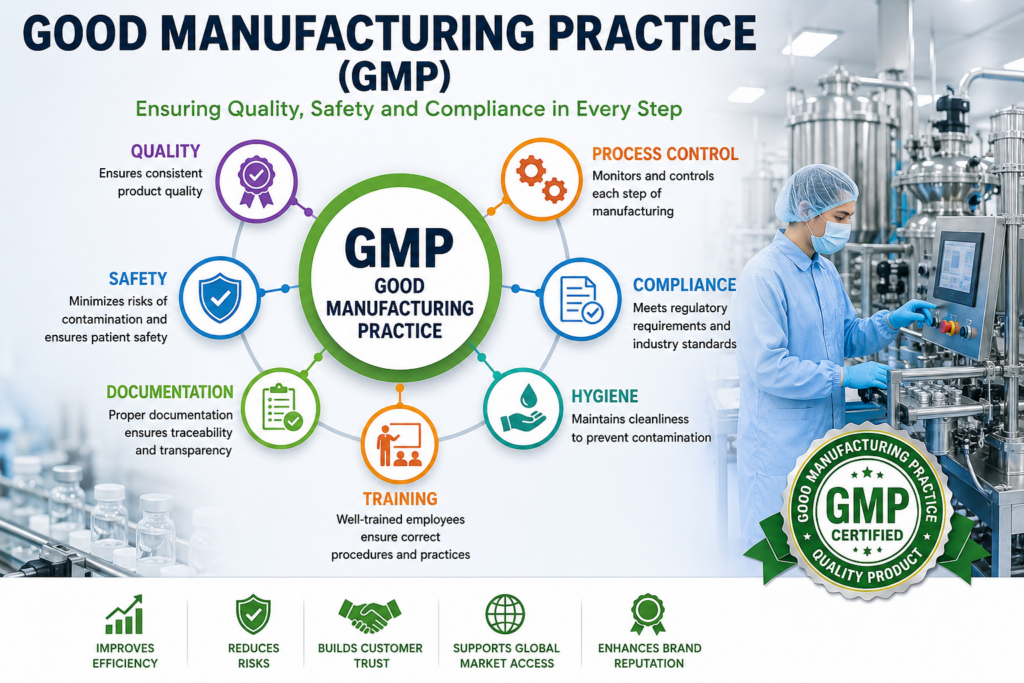
In today’s rapidly growing industrial sector, maintaining consistent product quality and regulatory compliance has become a necessity for manufacturers. Businesses operating in pharmaceuticals, food processing, cosmetics, nutraceuticals, medical devices, and other sectors must adopt reliable quality systems to meet customer expectations and legal requirements. One of the most effective systems used globally is the Good Manufacturing Practice.
By implementing Good Manufacturing Practice (GMP) standards, organizations can improve operational control, reduce manufacturing risks, and strengthen their market reputation. Many businesses in India seek professional compliance support from firms like the Council of compliances to streamline certification and regulatory procedures.
This article explains the importance of GMP systems, the certification process, implementation strategies, and the long-term benefits of GMP compliance.
What is Good Manufacturing Practice?
Good Manufacturing Practice refers to a structured system of procedures, quality controls, and operational standards designed to ensure products are consistently manufactured according to approved specifications.
The primary objective of Good Manufacturing Practice (GMP) is to minimize risks associated with manufacturing that cannot be eliminated through final product testing alone.
Common manufacturing risks addressed through GMP systems include:
- Product contamination
- Incorrect labeling
- Defective packaging
- Process inconsistencies
- Equipment malfunction
- Human error
Organizations following approved GMP guidelines can maintain product safety, quality consistency, and regulatory compliance more effectively.
Importance of GMP Compliance
The implementation of GMP compliance systems is essential for businesses seeking long-term growth and operational reliability.
Improved Product Quality
GMP systems help ensure that every product batch meets established quality standards.
Consumer Safety
Strict manufacturing controls reduce the risk of unsafe or defective products reaching consumers.
Regulatory Approval
Following approved GMP standards helps businesses comply with government regulations and industry requirements.
Better Brand Reputation
Companies with certified quality systems gain stronger customer trust and market credibility.
Increased Export Opportunities
International buyers often require suppliers to maintain valid GMP certification before entering global markets.
Core Principles of GMP Guidelines
Successful implementation of GMP guidelines requires businesses to establish comprehensive quality management systems.
1. Proper Documentation
Every manufacturing activity should be documented for traceability and compliance monitoring.
2. Personnel Training
Employees must receive regular training on hygiene, safety, and operational procedures.
3. Equipment Maintenance
Machines should be cleaned, calibrated, and maintained routinely.
4. Sanitation and Hygiene
Production facilities must maintain clean and contamination-free environments.
5. Quality Assurance
Products should undergo inspection and testing throughout the manufacturing cycle.
6. Controlled Storage Systems
Raw materials and finished products should be stored under appropriate environmental conditions.
GMP Certification in India
The demand for GMP certification in India is increasing as Indian manufacturers expand into domestic and international markets. Regulatory authorities and consumers both expect organizations to follow recognized manufacturing standards.
Obtaining GMP certification demonstrates a company’s commitment to quality, operational control, and customer safety.
Industries commonly requiring GMP certification include:
- Pharmaceutical manufacturing
- Food processing
- Cosmetics production
- Nutraceutical manufacturing
- Herbal products
- Medical devices
- Biotechnology industries
Professional GMP certification services help businesses manage compliance requirements more effectively and reduce certification delays.
GMP Process Explained
The GMP process involves multiple stages that help organizations establish compliant manufacturing systems.
Initial Assessment
A detailed review identifies gaps in current operational procedures.
Documentation Preparation
Companies create SOPs, quality manuals, inspection records, and compliance documents.
Employee Training
Workers receive training on GMP standards and operational practices.
Facility Improvements
Necessary infrastructure upgrades are implemented to meet compliance standards.
Internal Audit
Organizations conduct internal inspections before official certification assessments.
Certification Audit
An authorized body evaluates the company’s systems, facilities, and documentation.
GMP Approval
After successful verification, the organization receives formal GMP approval.
Many businesses hire a professional GMP consultant to simplify implementation and certification procedures.
Benefits of GMP Certification
Obtaining GMP certification offers several operational and commercial benefits.
Better Operational Efficiency
Standardized procedures reduce errors, waste, and production delays.
Enhanced Customer Trust
Customers prefer products manufactured under certified quality systems.
Improved Compliance Management
GMP systems help organizations maintain regulatory readiness.
Stronger Market Position
Certified companies often gain competitive advantages in local and international markets.
Reduced Risk of Product Recalls
Effective quality control minimizes defects and compliance failures.
Higher Business Growth Potential
GMP-certified organizations are better positioned for exports and strategic partnerships.
Role of a GMP Consultant
Implementing GMP systems can be complex, especially for businesses unfamiliar with regulatory requirements. An experienced GMP consultant provides technical expertise and guidance throughout the certification journey.
Consultants assist with:
- Compliance gap analysis
- Documentation preparation
- Employee training
- Internal audits
- Regulatory updates
- Certification coordination
Professional GMP certification services help businesses achieve compliance efficiently while minimizing operational disruptions.
Challenges in GMP Implementation
Despite its advantages, organizations may face several challenges during GMP implementation.
Documentation Burden
Maintaining detailed operational records can be time-consuming.
Infrastructure Investment
Facilities may require upgrades to meet GMP standards.
Employee Adaptation
Staff members may initially resist procedural changes.
Continuous Monitoring
Organizations must maintain ongoing compliance and quality control activities.
Regulatory Changes
Businesses need to stay updated with evolving compliance requirements.
Proper planning and expert consultancy support can help overcome these challenges successfully.
Future of GMP Standards in India
India is becoming a global manufacturing hub across sectors such as pharmaceuticals, healthcare, food processing, and industrial production. As quality expectations continue rising, compliance with international GMP standards is becoming increasingly important.
Modern technologies, including automation, digital monitoring systems, AI-driven inspections, and smart manufacturing practices, are reshaping the future of GMP implementation.
Organizations investing in strong Good Manufacturing Practice systems today will gain significant long-term advantages in quality assurance, operational efficiency, and global business expansion.
Conclusion
Implementing Good Manufacturing Practice is essential for businesses seeking sustainable growth, regulatory compliance, and customer satisfaction. GMP systems help organizations maintain product consistency, improve manufacturing efficiency, and reduce operational risks.
From pharmaceuticals to food processing and medical devices, businesses across India are recognizing the importance of maintaining effective GMP compliance systems.
Companies pursuing GMP certification in India can benefit greatly from professional guidance, structured implementation strategies, and reliable GMP certification services. By adopting internationally recognized GMP guidelines, organizations can build stronger reputations and achieve long-term success in competitive markets.
FAQs
1. What is Good Manufacturing Practice?
Good Manufacturing Practice is a quality system ensuring products are consistently manufactured according to approved standards.
2. Why is GMP certification important?
GMP certification improves product quality, ensures regulatory compliance, and increases customer trust.
3. What industries require GMP standards?
Industries such as pharmaceuticals, food processing, cosmetics, medical devices, and biotechnology commonly require GMP standards.
4. What are GMP guidelines?
GMP guidelines cover quality control, hygiene, documentation, equipment maintenance, and employee training procedures.
5. What is the GMP process?
The GMP process includes assessment, documentation, employee training, audits, inspections, and certification approval.
6. What does a GMP consultant do?
A GMP consultant helps businesses implement quality systems and prepare for certification audits.
7. What are GMP certification services?
These services help organizations manage documentation, compliance procedures, and certification requirements efficiently.
8. Is GMP certification mandatory in India?
Certain industries require mandatory GMP compliance depending on product categories and applicable regulations.